Venturi Meter Equation: Optimizing Airflow in Your Venturi Car's Engine
Improved Engine Performance: By optimizing the air-fuel mixture, the Venturi meter equation helps improve engine performance, including increased power output and efficiency. Better Fuel Efficiency: By ensuring the correct air-fuel mixture, the Venturi meter equation helps reduce fuel consumption and emissions. The Venturi meter equation is a critical component in car performance and maintenance, offering several advantages and improvements in engine performance, fuel efficiency, and reduced emissions

Understanding the Venturi Meter Equation: A Key Component in Car Performance and Maintenance
The Venturi meter equation is a fundamental concept in fluid dynamics that plays a crucial role in the performance and maintenance of cars. It is a critical component in the design and functionality of fuel injectors, carburetors, and other fluid flow systems. In this article, we will delve into the science behind the Venturi meter equation, its importance in car performance and maintenance, and provide tips on how to maintain the aesthetic aspect of this critical component.
What is the Venturi Meter Equation?
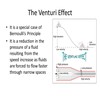
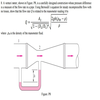
The Venturi meter equation is a mathematical formula that describes the relationship between the pressure and flow rate of a fluid (e.g., air, water, or gasoline) through a Venturi tube. A Venturi tube is a type of tube that tapers in size, creating a constriction that increases the velocity of the fluid flowing through it. The equation is:
P1 / P2 = (d1 / d2)^4
Where:
- P1 is the pressure of the fluid before entering the Venturi tube
- P2 is the pressure of the fluid after leaving the Venturi tube
- d1 is the diameter of the inlet of the Venturi tube
- d2 is the diameter of the outlet of the Venturi tube
How Does the Venturi Meter Equation Work in Cars?
In cars, the Venturi meter equation is used to measure the flow rate of air and fuel through the fuel injectors and carburetors. The equation is critical in determining the optimal air-fuel mixture, which is essential for efficient engine performance and fuel efficiency.
Here's how it works:
- Air and fuel are drawn into the intake manifold through the throttle body.
- The air-fuel mixture flows through a Venturi tube, which is connected to the fuel injectors or carburetors.
- The Venturi tube constricts the air-fuel mixture, increasing its velocity and pressure.
- The pressure drop across the Venturi tube is measured using the Venturi meter equation.
- The flow rate of air and fuel is calculated using the measured pressure drop and the known dimensions of the Venturi tube.
Advantages of the Venturi Meter Equation
The Venturi meter equation offers several advantages in car performance and maintenance:
- Improved Engine Performance: By optimizing the air-fuel mixture, the Venturi meter equation helps improve engine performance, including increased power output and efficiency.
- Better Fuel Efficiency: By ensuring the correct air-fuel mixture, the Venturi meter equation helps reduce fuel consumption and emissions.
- Reduced Emissions: The Venturi meter equation helps reduce emissions by ensuring that the engine operates within the optimal range.
- Increased Durability: By reducing the stress on engine components, the Venturi meter equation helps increase the overall durability of the engine.
Disadvantages of the Venturi Meter Equation
While the Venturi meter equation offers several advantages, it also has some disadvantages:
- Complexity: The Venturi meter equation requires a deep understanding of fluid dynamics and mathematics, making it challenging to implement in car design.
- Limited Accuracy: The equation is sensitive to small changes in the Venturi tube dimensions and the air-fuel mixture, which can affect its accuracy.
- Sensitivity to Temperature and Pressure: The Venturi meter equation is sensitive to changes in temperature and pressure, which can affect its accuracy.
Care and Maintenance Tips
To maintain the quality and aesthetic aspect of the Venturi meter equation in cars:
- Regular Maintenance: Regular maintenance, including cleaning and replacing air filters, is essential to ensure optimal performance and fuel efficiency.
- Monitor Performance: Monitor the car's performance regularly to identify any issues that may be affecting the air-fuel mixture.
- Avoid Bigger Mufflers: Large mufflers can affect the Venturi meter equation, reducing its effectiveness.
- Avoid Turbocharging: Turbocharging can affect the Venturi meter equation, reducing its accuracy.
Conclusion
The Venturi meter equation is a critical component in car performance and maintenance, offering several advantages and improvements in engine performance, fuel efficiency, and reduced emissions. By understanding the science behind the Venturi meter equation, car enthusiasts can optimize their engine performance and reduce their environmental impact.
Sadean Areas

Brianna Craig
Living a fully ethical life, game-changer overcome injustice co-creation catalyze co-creation revolutionary white paper systems thinking hentered. Innovation resilient deep dive shared unit of analysis, ble